
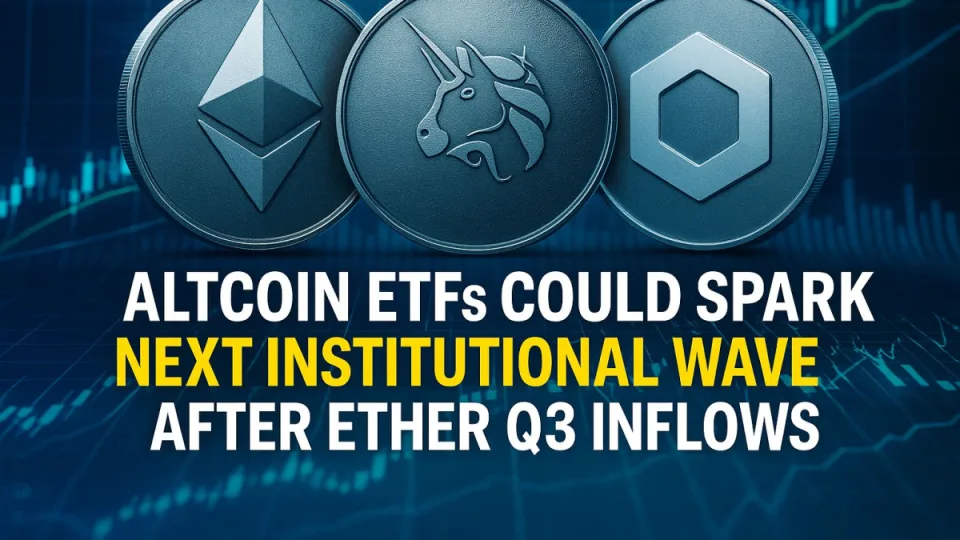
Institutional investors may soon pivot from Bitcoin and Ethereum toward altcoins as the next phase of cryptocurrency exchange-traded funds (ETFs) takes shape in the United States, according to market analysts.
Despite limited regulatory progress due to the ongoing U.S. government shutdown, the U.S. Securities and Exchange Commission (SEC) has already received at least five new filings for altcoin-based ETFs since early October. Analysts suggest that these filings mark the start of a broader institutional shift toward regulated exposure to alternative digital assets beyond Bitcoin and Ether.
Related reporting: Crypto ETFs See Sharp Outflows as U.S. Political Unrest Erodes Investor Confidence
“Altcoin ETF inflows are the inevitable next step after Bitcoin and Ethereum ETFs proved institutional demand,” said Leon Waidmann, head of research at Web3 analytics firm Onchain, in an interview with Cointelegraph. “Each approval opens the door for the next wave of institutional buying. This is regulatory confidence translating directly into capital flows.”
The comments come amid fresh data showing Ethereum ETFs overtaking Bitcoin ETFs in inflows during the third quarter of 2025 — a notable milestone that could signal a broader appetite for diversified crypto exposure. According to data from SosoValue, spot Ether (ETH) ETFs attracted $9.6 billion in inflows during Q3, outpacing the $8.7 billion seen across spot Bitcoin (BTC) ETFs.
Bitcoin ETF Inflows, monthly, all-time chart. Source: SosoValue.com
This shift underscores growing institutional demand for alternative blockchain assets and could set the stage for new ETF products tied to high-cap altcoins. Waidmann believes that once these ETFs are approved, they could fuel “years of sustained inflows” into the broader crypto market, similar to the institutional adoption that followed Bitcoin ETF approvals earlier in the year.
Supporting this trend, on-chain data from Nansen shows that the industry’s most profitable “smart money” traders are already positioning themselves for the next ETF cycle. The tokens most commonly held by these traders include Uniswap (UNI), Aave (AAVE), and Chainlink (LINK) — all of which have been consistently viewed as prime candidates for future ETF listings.
However, not all analysts are equally optimistic. Some warn that the absence of BlackRock, the world’s largest asset manager, from the altcoin ETF race could limit the scale of potential inflows. BlackRock’s spot Bitcoin ETF, launched earlier in 2025, has been the clear frontrunner, amassing $28.1 billion in total investments — making it the only crypto ETF with positive year-to-date inflows.
Without BlackRock’s involvement, other Bitcoin ETFs have collectively recorded net outflows of $1.27 billion year-to-date, according to Vetle Lunde, head of research at K33. Lunde cautioned that a similar pattern could emerge in the altcoin ETF market, potentially dampening the inflow momentum if institutional heavyweights remain on the sidelines.
Even so, the broader narrative remains bullish. The combination of strong Ethereum ETF performance, rising smart money accumulation, and growing regulatory clarity positions altcoin ETFs as the next frontier in institutional crypto adoption — one that could gradually reshape portfolio diversification in digital asset markets.