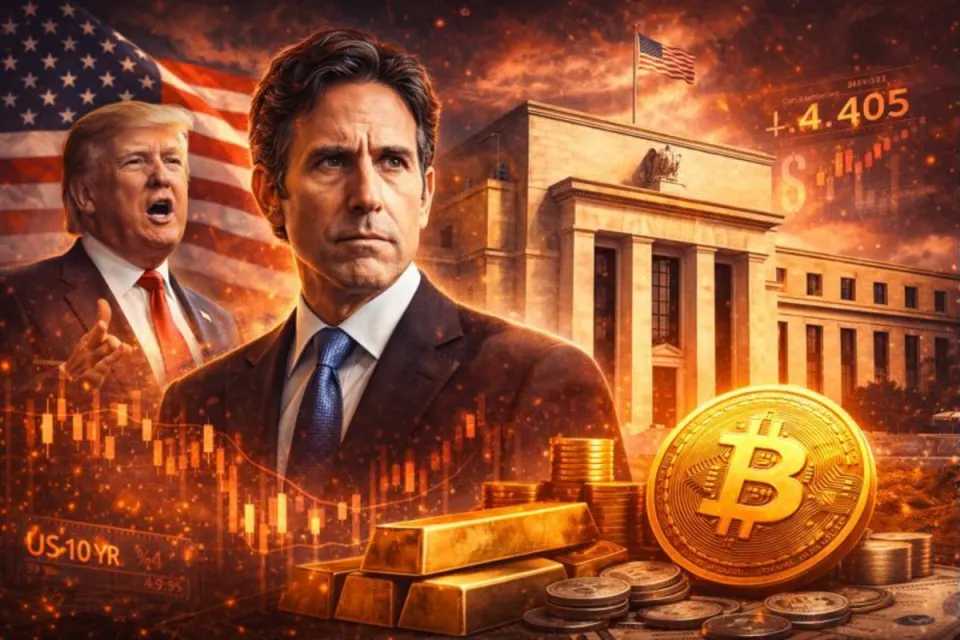
US President Donald Trump is expected to nominate Kevin Warsh as the next chair of the Federal Reserve, according to multiple media reports, setting the stage for a potentially sharper shift in US monetary policy.
Trump said Thursday that he would announce his choice to succeed current Fed chair Jerome Powell on Friday. Bloomberg, The Wall Street Journal and The New York Times have all reported that Warsh is the likely nominee. Powell’s term is set to expire in May.
Related reporting: Cowen expects Bitcoin to keep lagging equities
Reuters earlier reported that Trump met privately with Warsh this week, with sources describing the meeting as favorable. Warsh, who served as a Federal Reserve governor from 2006 to 2011, has long been viewed as a proponent of tighter monetary policy, fiscal restraint and a reduced reliance on quantitative easing.
Prediction markets quickly reflected the shift in expectations. Warsh’s odds of securing the nomination surged on platforms such as Polymarket and Kalshi, while earlier contenders saw their probabilities fall sharply.
Markets also began to react. The US dollar strengthened and Treasury yields moved higher as investors priced in the prospect of a more hawkish Fed leadership, signaling expectations of tighter financial conditions ahead.
subheading
Warsh has taken a more open stance on Bitcoin than the current Fed
Warsh has previously expressed a notably different view on Bitcoin than Powell, who has largely downplayed the cryptocurrency’s role in the US financial system. In a July interview with the Hoover Institution, Warsh argued that Bitcoin does not threaten the Fed’s authority and could instead serve as a form of market feedback.
He said Bitcoin could act as a “policeman” on policy decisions, offering signals when fiscal and monetary choices undermine confidence. The comments have made Warsh a rare figure among top central bank candidates willing to publicly acknowledge a potential role for crypto as a check on policy credibility.
If confirmed, Warsh would inherit the Fed at a time of persistent inflation concerns, elevated government debt and growing political scrutiny of central bank independence — all factors that could shape a more conservative policy approach.