
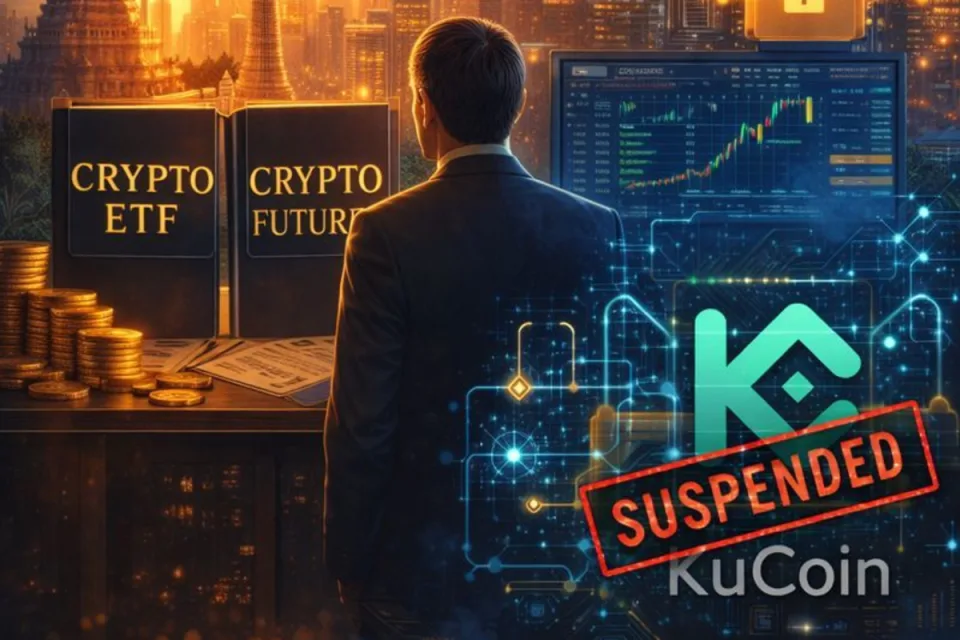
Thailand’s securities regulator is preparing a new set of rules to support crypto exchange-traded funds, derivatives trading and tokenized investment products, signaling a push to attract institutional capital as interest in digital assets broadens across the region.
The country’s Securities and Exchange Commission plans to publish formal guidelines for crypto ETFs early this year, according to comments from deputy secretary-general Jomkwan Kongsakul reported by the Bangkok Post. The initiative is part of a broader effort to modernize Thailand’s capital markets and position the country as a regional hub for regulated digital asset activity.
Related reporting: Crypto ETP Inflows Hit $48.7B in 2025, Surpassing 2024 Record as Ether and Altcoins Surge
Crypto ETFs, futures and tokenization take shape
Kongsakul said crypto ETFs offer a key advantage for traditional investors by simplifying access to digital assets without the operational risks tied to wallets and private key management.
“A key advantage of crypto ETFs is ease of access; they eliminate concerns over hacking and wallet security, which has been a major barrier for many investors,” he said.
Beyond ETFs, the SEC plans to enable crypto futures trading on the Thailand Futures Exchange and introduce market makers to support liquidity. Digital assets are also set to be formally recognized as an asset class under the country’s Derivatives Act, a move that would integrate crypto more closely into existing financial infrastructure.
Thailand’s strategy reflects strong domestic interest in crypto trading, even as direct crypto payments remain banned. Retail participation remains high, with the country’s largest exchange, Bitkub, reporting average daily trading volumes of around $60 million.
Investor limits and tougher rules for financial influencers
While the SEC’s board has already approved crypto ETFs in principle, regulators are now finalizing investment and operational requirements. Under the proposed framework, crypto would be treated like any other asset class, with investors allowed to allocate up to 5% of a diversified portfolio to digital assets.
At the same time, the regulator is tightening oversight of so-called financial influencers. Kongsakul said any public recommendations related to securities or expected investment returns would require proper authorization, either as a licensed investment adviser or an introducing broker.
The SEC is also working with the Bank of Thailand on a tokenization sandbox, encouraging issuers of bond tokens and other digital instruments to test products within a regulated environment before broader rollout.
Jomkwan Kongsakul (middle), pictured speaking at a conference in 2019, says the Thai SEC is moving to support crypto ETFs with rules. Source: UNDP
KuCoin Thailand works to restore operations
Regulatory scrutiny has also intensified around exchanges operating in the country. Earlier this month, the Thai SEC suspended the local operations of KuCoin after its capital reportedly fell below minimum requirements for five consecutive days, according to local media.
KuCoin Thailand said the issue stemmed from a shareholder dispute between Singapore-based CI Group and KuCoin Global, which delayed approval of a planned capital increase, rather than from liquidity shortfalls. The exchange, which entered the Thai market in mid-2025, said it plans for its local entity to apply for a digital-asset broker license, allowing it to offer a wider range of regulated financial products.
Together, the regulatory push and enforcement actions highlight Thailand’s attempt to strike a balance between encouraging innovation and tightening oversight as institutional interest in crypto continues to grow.