
Competition and Liquidity Shape Africa’s Stablecoin Costs
Africa posted the highest median stablecoin-to-fiat conversion spreads among major regions in January, according to data from payments infrastructure firm Borderless.xyz. Across 66 currency corridors and nearly 94,000 rate observations, the region recorded a median spread of 299 basis points, or roughly 3%. That compares with about 1.3% in Latin America and just 0.07% in Asia.
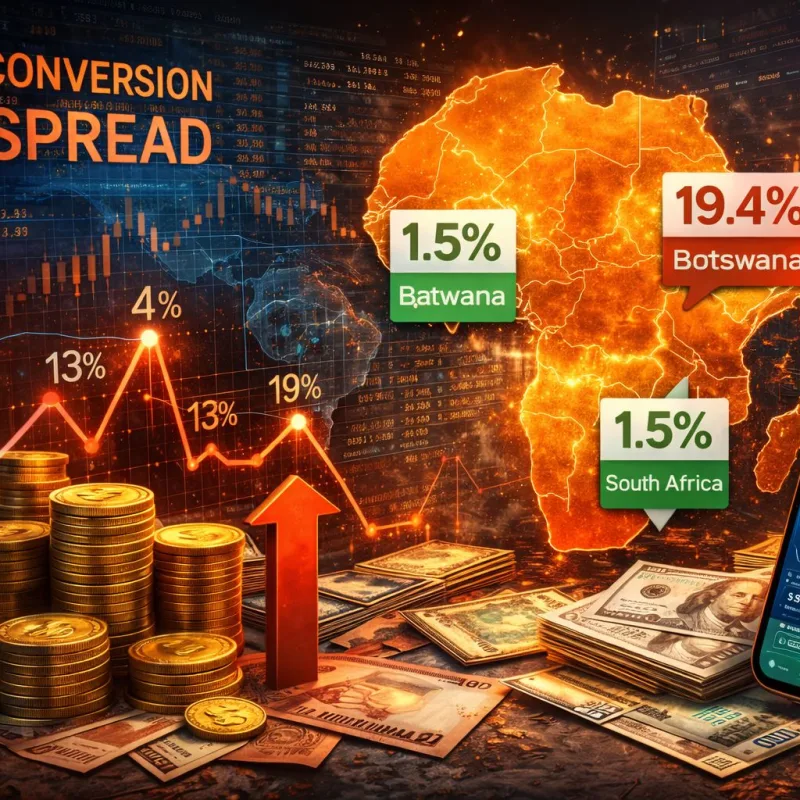
In practical terms, conversion costs ranged widely. South Africa recorded spreads as low as 1.5%, while Botswana peaked near 19.5%. The data captures the gap between a provider’s buy and sell rate for a stablecoin-fiat pair — similar to a bid-ask spread in traditional finance — and reflects the real execution cost users face when cashing out into local currency.
Related reporting: Panetta expects tokenized bank money to remain central
The findings underscore a growing reality: while stablecoins are often marketed as cheaper alternatives to traditional remittance rails, the cost advantage depends heavily on local market structure.
Regional median spreads for stablecoin conversions. Source: Borderless.xyz
Markets With More Players See Lower Costs
Borderless.xyz found a clear pattern. Corridors with multiple competing providers generally posted spreads between 1.5% and 4%. Where only one dominant provider operated, costs frequently exceeded 13%.
Botswana and Congo stood out for elevated pricing, while South Africa’s more developed foreign exchange ecosystem supported tighter spreads. The report attributes these discrepancies primarily to local liquidity conditions and competition, rather than the underlying blockchain infrastructure.
In other words, stablecoin rails may be global, but pricing remains deeply local.
Conversion costs in different competition levels. Source: Borderless.xyz
Stablecoins vs. Traditional FX: Narrow Gap Globally, Wider in Africa
The report also examined how stablecoin exchange rates compare with traditional interbank foreign exchange mid-market rates — a metric it calls the “TradFi premium.”
Globally, across 33 currencies, the median difference between stablecoin rates and traditional FX mid-rates was just 5 basis points (0.05%), suggesting parity in most markets. In Africa, however, the median gap widened to about 119 basis points, or 1.2%, with significant variation by country.
At the World Economic Forum in Davos earlier this year, economist Vera Songwe noted that stablecoins are helping reduce remittance costs in Africa, where legacy services can charge roughly $6 per $100 sent. The new data adds nuance: while settlement may be faster and potentially cheaper than traditional channels, conversion spreads in certain corridors remain substantial.