
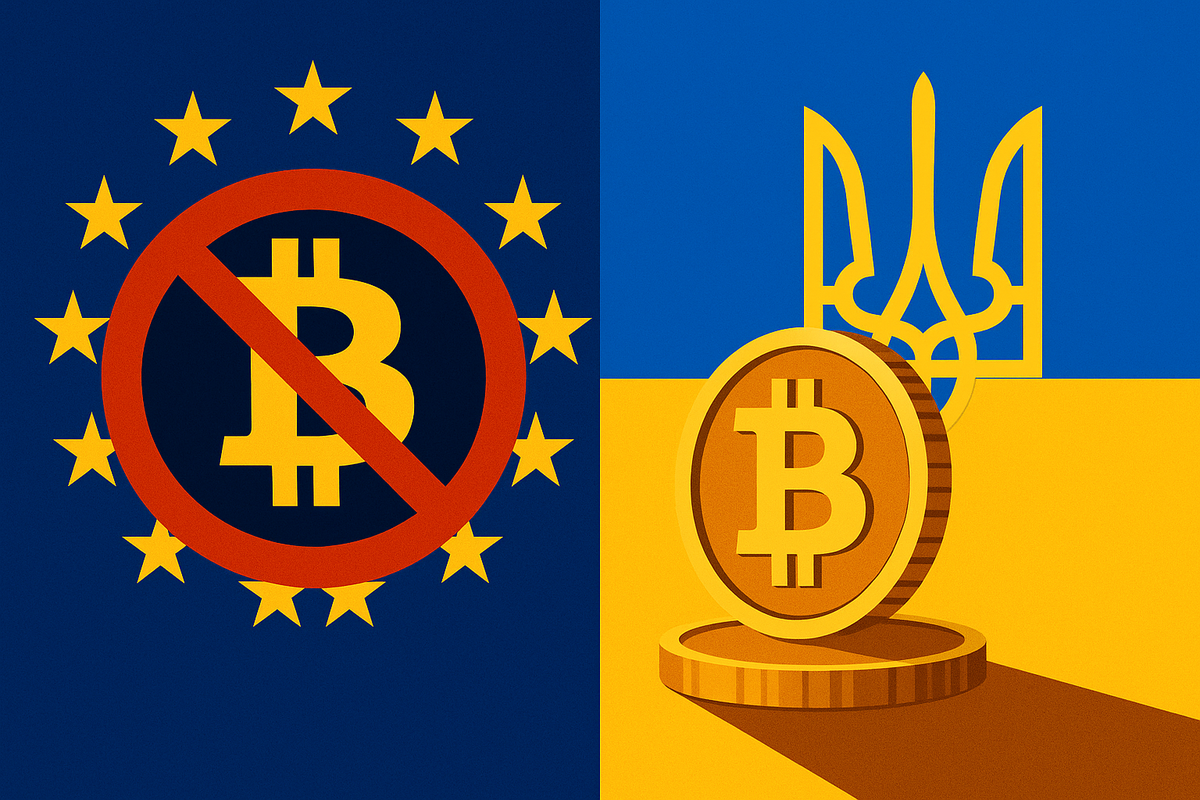
The European Union is preparing to impose its toughest measures yet against Russia’s financial networks, with its latest sanctions package directly targeting cryptocurrency platforms for the first time.
Announced Friday by European Commission President Ursula von der Leyen, the bloc’s 19th sanctions package introduces sweeping restrictions aimed at curbing Russia’s growing use of digital assets to bypass earlier sanctions. The measures would ban all cryptocurrency transactions for Russian residents, cut off foreign banks linked to Moscow’s alternative payment systems, and prohibit dealings with entities based in Russian special economic zones.
Earlier coverage: Bhutan Shifts $107M in Bitcoin as Fed Rate Cut Sparks Whale Activity
“As evasion tactics grow more sophisticated, our sanctions will adapt to stay ahead,” von der Leyen said. “For the first time, our restrictive measures will hit crypto platforms and prohibit transactions in cryptocurrencies.”
EU’s 19th sanctions package statement. Source: ec.europe.eu
The new restrictions still require unanimous approval from all 27 EU member states. They were introduced in response to what von der Leyen described as Russia’s “largest-scale drone and missile attacks against Ukraine,” which recently included Shahed drones violating EU airspace in Poland and Romania.
Russia’s reliance on digital assets to skirt sanctions
Reports earlier this year indicated that Russian oil companies had turned to cryptocurrencies, conducting tens of millions of dollars in transactions each month using Bitcoin (BTC) and Tether’s USDt (USDT), according to Reuters.
In July, the U.S. Department of Justice charged Russian national Iurii Gugnin with laundering more than $540 million through crypto firms Evita Investments and Evita Pay while helping sanctioned Russian entities move money abroad. The case underscored growing concerns in both Washington and Brussels that Russia is leveraging digital assets to mitigate the economic impact of sanctions.
Ukraine moves toward a national Bitcoin reserve
While the EU cracks down on Russia’s use of crypto, Ukraine is considering turning Bitcoin into a tool of financial resilience.
Ukrainian lawmakers are finalizing a draft bill to establish a national Bitcoin reserve, a proposal first introduced during the Crypto 2025 conference in Kyiv earlier this year. Lawmaker Yaroslav Zhelezniak confirmed in May that the bill would soon be submitted to parliament, describing it as a step toward strengthening the country’s long-term financial independence.
The concept of Bitcoin as a reserve asset has gained traction globally since March, when U.S. President Donald Trump signed an executive order to create a Strategic Bitcoin Reserve using confiscated BTC from criminal cases. Sweden also entered the debate in April, when MP Rickard Nordin urged the government to explore Bitcoin as a hedge against inflation and financial instability.
Source: Margo Martin
If adopted, Ukraine’s move would mark one of the most significant national-level endorsements of Bitcoin, positioning it alongside traditional reserves like gold and foreign currencies.